Introduction
«The Marketplace» comes up constantly in any conversation about freelancer health insurance, but if you’ve never bought your own coverage before, it’s not always obvious what it actually is or how the process works. This guide breaks it down step by step — what the Marketplace is, how enrollment windows work, how plans are structured, and how your self-employed income factors into the price you’ll pay.
What the ACA Marketplace Actually Is
The Health Insurance Marketplace (sometimes called the ACA Marketplace or «Obamacare exchange») is the system created under the Affordable Care Act where individuals who don’t have access to employer or government coverage can shop for and buy a health plan. You can access it either through the federal site, Healthcare.gov, or through your own state’s exchange if your state runs one separately.
For self-employed people, it’s usually the default option, for one simple reason: insurers selling Marketplace plans can’t deny you coverage or charge you more based on your health history — something that mattered enormously before the ACA existed, and still matters for anyone with an ongoing health condition.
How Plans Are Organized: The Metal Tiers
Every Marketplace plan falls into one of four tiers, each representing a different balance between your monthly premium and what you pay when you actually use care:
- Bronze: Lowest premium, highest costs when you need care. Generally covers about 60% of average costs, leaving you responsible for the rest.
- Silver: Moderate premium, moderate costs. Covers roughly 70% of average costs — and importantly, this is the only tier eligible for additional cost-sharing reductions if your income qualifies (see below).
- Gold: Higher premium, lower costs when you use care. Covers roughly 80% of average costs.
- Platinum: Highest premium, lowest costs when you use care. Covers roughly 90% of average costs.
A common mistake is picking the cheapest premium without considering how often you expect to use care. A Bronze plan might save you money monthly but cost more overall if you have a health event during the year, especially if you don’t qualify for subsidies that lower a Silver plan’s cost-sharing.
Enrollment Windows: When You Can Actually Sign Up
This is one of the biggest adjustments for people coming from employer coverage, where enrollment timing was mostly invisible to them.
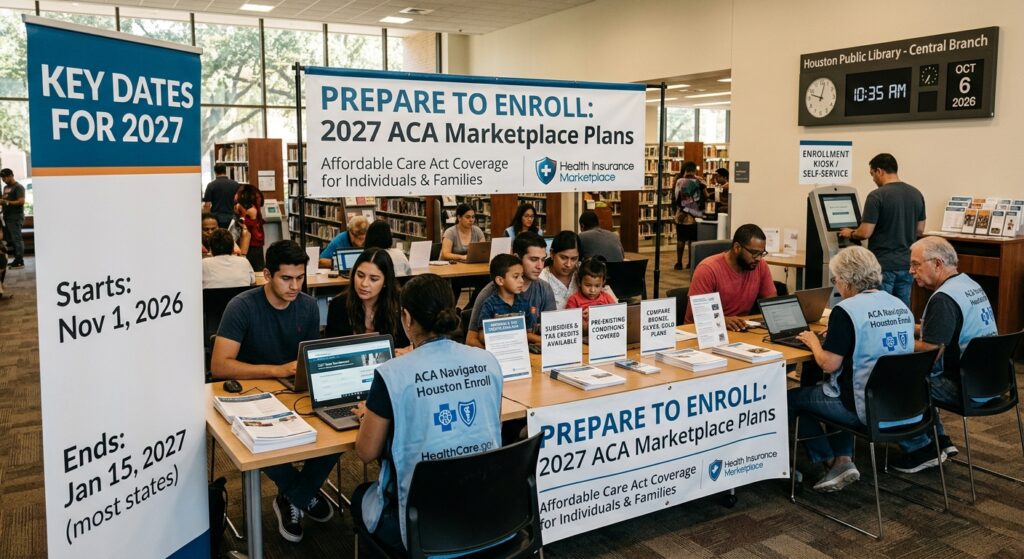
Open Enrollment: Runs annually, typically from November 1 to January 15 in most states (a handful of state-run exchanges set slightly different dates). This is the one guaranteed window each year where anyone can sign up or switch plans, no questions asked.
Special Enrollment Period (SEP): Outside of Open Enrollment, you can only sign up if you experience a qualifying life event, which commonly includes:
- Losing other health coverage (including leaving a job that provided it)
- Getting married
- Having or adopting a child
- Moving to a new coverage area
- A significant change in household income that affects subsidy eligibility (in some cases)
If none of these apply and you miss Open Enrollment, you’ll generally need to wait until the next one — which is exactly why so many new freelancers end up with a coverage gap simply from not knowing this rule existed.
How Your Self-Employed Income Affects Your Price
This is where things get genuinely different for freelancers compared to salaried employees, and it’s worth understanding in detail because it directly affects what you pay.
Subsidies are based on estimated annual household income, calculated as a percentage of the federal poverty line, not a flat income cutoff. Many self-employed people assume they make «too much» to qualify for help and are surprised to find they’re eligible for a meaningful subsidy, especially after deducting legitimate business expenses that lower your taxable income.
The tricky part: since your freelance income can fluctuate, you’re estimating a number you don’t fully know yet. This has two important implications:
- You can update your estimate during the year if your income changes significantly — and you generally should, since this adjusts your subsidy in real time rather than waiting for a surprise at tax time.
- At tax time, your subsidy gets reconciled against your actual income. If you underestimated your income and received a bigger subsidy than you should have, you may owe some of it back. If you overestimated, you may get money back as a tax credit.
This reconciliation process is one of the most misunderstood parts of Marketplace coverage for self-employed people, and it’s worth being conservative or revisiting your estimate mid-year if your income shifts meaningfully.
What You’ll Need to Apply
- An estimate of your household’s annual income for the coverage year (not last year’s tax return, though it’s a useful starting reference point).
- Information on anyone in your household who needs coverage.
- Your state of residence, since available plans and prices vary significantly by location — sometimes even by county.
Common Mistakes Self-Employed People Make on the Marketplace
- Guessing income too conservatively or too generously, leading to an unpleasant surprise at tax time instead of adjusting the estimate as the year goes on.
- Choosing Bronze by default without comparing whether a subsidized Silver plan with cost-sharing reductions actually ends up cheaper overall.
- Missing Open Enrollment because there’s no employer reminder email, and assuming (incorrectly) that losing a job automatically re-enrolls them somewhere.
- Not updating income when a big freelance project ends or a slow month hits, leaving money on the table in missed subsidy adjustments.
Frequently Asked Questions
Do I have to use Healthcare.gov, or can I buy directly from an insurer? You can buy directly from an insurer outside the Marketplace, but you’ll only be eligible for subsidies if you enroll through the Marketplace (Healthcare.gov or your state exchange) — buying directly means paying full price regardless of your income.
What if my income is hard to predict as a freelancer? Give your best honest estimate based on your current trajectory, and update it in your Marketplace account as soon as you have a clearer picture — this keeps your subsidy accurate and avoids a larger reconciliation bill at tax time.
Can I switch plans mid-year if I find a better option? Generally no, unless you qualify for a Special Enrollment Period. Plan changes outside a life event typically have to wait for the next Open Enrollment.
Is the Marketplace the same as Medicaid? No — Medicaid is a separate, income-based program with its own eligibility rules, and in some cases you may be directed toward Medicaid instead of Marketplace subsidies if your income falls below a certain threshold in your state.
This guide is for general informational purposes and isn’t a substitute for advice from a licensed insurance agent, Marketplace navigator, or tax professional. Enrollment dates, income thresholds, and subsidy rules can change year to year — always confirm current details on Healthcare.gov or your state exchange before enrolling.