Introduction
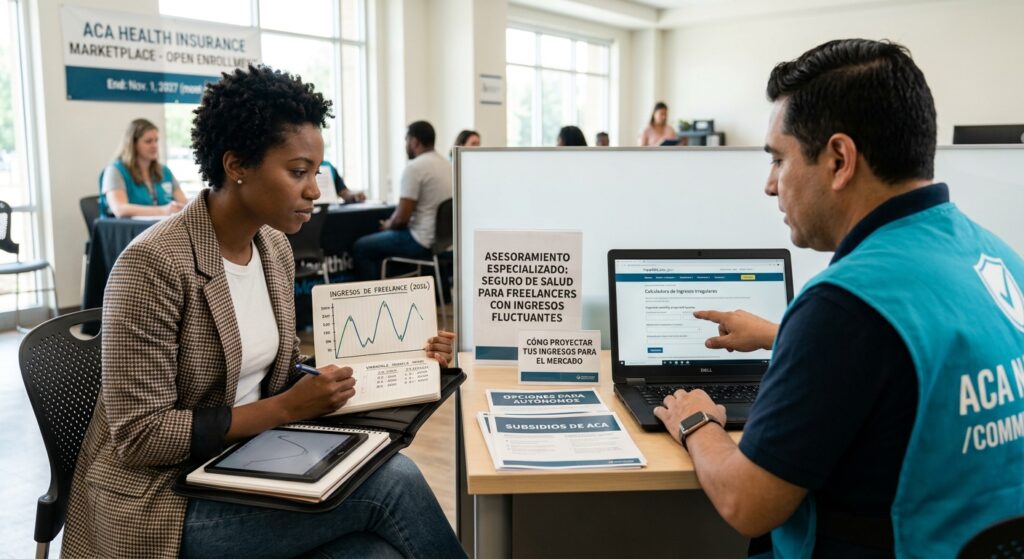
A feast-or-famine month isn’t just a cash flow headache for freelancers — it directly complicates one of the biggest fixed costs in your budget: health insurance. The Marketplace system is built around estimating a full year of income in advance, which is a strange exercise when your actual income might be unpredictable from one quarter to the next. This guide covers how to realistically budget for and manage health insurance when your paycheck isn’t the same every month.
Why Irregular Income Makes Health Insurance Harder to Plan
Health insurance premiums are a fixed monthly cost, regardless of whether that month was a great one or a slow one for your freelance business. Combine that with ACA subsidies being based on an annual estimate of income you’re still earning, and you get two compounding sources of uncertainty:
- Your subsidy amount might not match your actual monthly cash flow, since it’s based on a yearly average, not what you earned that specific month.
- Your actual year-end income might land somewhere different from your estimate, triggering a reconciliation adjustment at tax time (see our guide on ACA subsidies for the full breakdown of how that works).
None of this means Marketplace coverage doesn’t work for freelancers with variable income — it absolutely does, for most people — but it does mean treating your premium differently in your budgeting than you might treat a Netflix subscription.
Strategy 1: Budget Using Your Lowest Realistic Month, Not Your Average
A common freelance budgeting mistake is sizing fixed costs like insurance around an average month, which looks fine on paper but breaks down the first time a slow month actually happens. A more resilient approach is to ask: «Could I cover this premium even in my worst realistic month?» If the answer is no, it’s worth either building a larger buffer before committing to a higher-tier plan or reconsidering your plan tier.
Strategy 2: Build a Dedicated Insurance Buffer
Many self-employed people with irregular income keep a separate savings buffer specifically sized to cover several months of fixed costs — insurance premium included — so a slow stretch doesn’t force a choice between paying rent and paying for coverage. This isn’t unique to health insurance, but because a lapse in coverage can mean waiting for the next Open Enrollment to re-enroll, missing a premium payment carries a higher cost than missing most other subscriptions.
Strategy 3: Update Your Marketplace Income Estimate as the Year Unfolds
This is the single most useful habit for freelancers with unpredictable income, and it’s covered in more depth in our subsidies guide — but the short version: your subsidy is based on your estimate, and you’re allowed to revise that estimate during the year as your actual numbers become clearer.
- Had a slower first half than expected? Update your estimate downward, and your ongoing subsidy adjusts to reflect it.
- Landed a big client and your income jumped? Update it upward to avoid a larger reconciliation bill later.
Treating your Marketplace estimate as a living number, rather than something you set once in January and forget, meaningfully reduces the size of any year-end surprise.
Strategy 4: Consider How Plan Tier Affects Risk, Not Just Premium
With irregular income, there’s a trade-off worth thinking through deliberately:
- A lower premium, higher deductible plan (Bronze) keeps your fixed monthly cost lower, which can feel safer during lean months — but it means a larger out-of-pocket hit if you need care during a year when cash is already tight.
- A higher premium, lower deductible plan (Silver or Gold), especially if you qualify for cost-sharing reductions, raises your fixed cost but reduces the risk of a large, unplanned medical bill landing in the same year as a slow income stretch.
There’s no universally «right» answer here — it depends on your buffer, your risk tolerance, and whether you have any ongoing health needs that make the deductible side of the equation more likely to matter.
Strategy 5: Separate «Business Slow Month» From «Can’t Pay Premium» Early
If a particular month is genuinely tight, it’s worth knowing in advance what your insurer’s grace period looks like for a missed or late premium payment, rather than discovering it in the moment. Marketplace plans generally have a grace period before coverage is terminated for non-payment, but the exact terms vary by insurer and by whether you’re receiving subsidies — this is worth confirming directly with your plan rather than assuming.
A Practical Monthly Routine
For freelancers managing this well, a simple recurring habit tends to help:
- Set aside your insurance premium as a fixed «bill» the moment income comes in, before discretionary spending — treating it the same way you’d treat rent.
- Every quarter, compare your actual year-to-date income against your Marketplace estimate.
- If there’s a meaningful gap in either direction, update your estimate rather than waiting for tax season to find out.
- Keep your insurance buffer separate from your general business savings, so it doesn’t quietly get spent on something else during a good month.
Frequently Asked Questions
Should I choose the cheapest plan if my income is unpredictable? Not automatically — a cheaper premium with a high deductible can backfire if you need care during a tight month. It’s worth weighing your buffer and risk tolerance against the premium savings rather than defaulting to the lowest monthly cost.
What happens if I genuinely can’t pay my premium one month? Contact your insurer as soon as possible to understand your specific grace period and options — missing this conversation and simply not paying is the scenario most likely to result in a coverage lapse.
Can I lower my premium temporarily during a slow stretch? You can update your income estimate if your actual income has genuinely dropped, which may increase your subsidy and lower your premium going forward — but this should reflect a real, sustained change in income, not a single slow week.
Is it worth switching plans mid-year if my income changes a lot? Generally, you can’t switch plans outside Open Enrollment unless you qualify for a Special Enrollment Period — but you can and should update your subsidy estimate, which adjusts your cost on your existing plan.
This guide is for general informational purposes and isn’t a substitute for advice from a licensed insurance agent, Marketplace navigator, or financial professional. Always confirm current grace period policies and subsidy rules directly with your insurer or Healthcare.gov.